


Exploring Desire: Sameer Gudhate's Review of Billion Wicked Thoughts by Ogi Ogas and Sai Gaddam

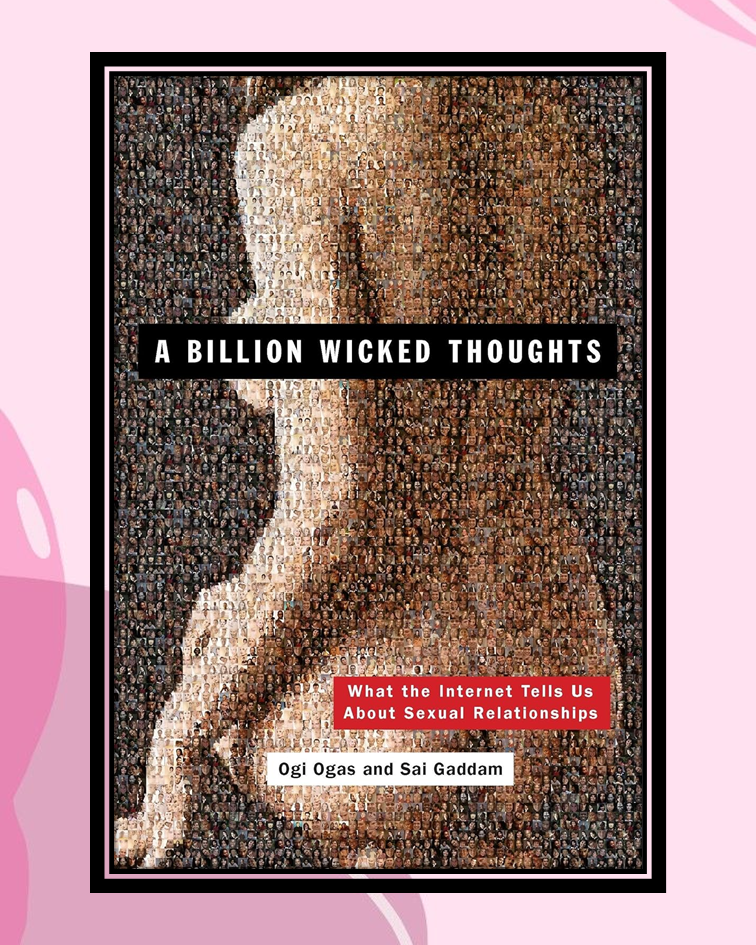
There’s a strange kind of intimacy in knowing what millions of strangers type into a search bar at 2:13 a.m.
That was the thought circling my mind as I moved through Billion Wicked Thoughts by Ogi Ogas and Sai Gaddam. Not because the material is shocking—though parts of it are—but because it treats private curiosity like archaeological evidence. Keystrokes become fossils. Patterns become evolutionary footprints. And suddenly, what feels deeply personal starts looking statistical.
The book positions itself as a kind of successor to Alfred Kinsey’s mid-century surveys, only this time the “participants” don’t sit across from an interviewer. They reveal themselves anonymously, through search histories and consumption habits. It’s an audacious premise: if you want to understand desire in the twenty-first century, follow the data trails people leave behind when no one is watching.
I didn’t read this book in one linear march. I dipped in, paused, reread sections, sometimes closed it just to sit with what I’d encountered. There’s something mildly disorienting about seeing human longing dissected like a lab specimen. One moment you’re reading about romance novels and the elaborate emotional scaffolding they construct; the next, you’re knee-deep in search-term analytics that reduce fantasy to frequency charts.
And yet, what held my attention was not the titillation. It was the pattern recognition.
The authors argue that men, broadly speaking, are visually driven and direct in their arousal cues, while women navigate a more layered terrain—where context, narrative, and emotional calibration matter as much as physical stimulus. It’s a thesis that won’t feel revolutionary if you’ve spent time with evolutionary psychology, especially works like The Evolution of Desire by David Buss. But here, the difference lies in scale. Instead of lab experiments and questionnaires, we’re dealing with mountains of real-world behavioural data.
At one point, I found myself thinking: this is less a book about sex and more a book about storytelling. Pornography and romance fiction are framed almost as parallel narrative systems—one compressing desire into explicit imagery, the other stretching it across anticipation, tension, and emotional payoff. Whether one agrees with that symmetry is another matter. But it’s a provocative lens.
There were moments I bristled. The male/female dichotomy is drawn with bold strokes—sometimes too bold. Real people are messy; they spill outside categories. I kept wondering about the overlap, the grey zones, the clusters that don’t fit neatly into “Elmer Fudd versus Miss Marple.” Desire, in lived experience, feels less like a straight line and more like tangled earphones in a pocket. The book acknowledges complexity, but occasionally smooths it over in favor of a cleaner evolutionary narrative.
Still, some insights lingered with me. The discussion around romance novels as spaces where emotional and psychological arousal are foregrounded felt especially compelling. The idea that certain fantasies—however contradictory on the surface—can coexist because different psychological adaptations are firing at once… that struck me as honest. Human beings are not single-track organisms. We are layered systems with conflicting scripts running simultaneously.
One sentence kept echoing in my mind long after I closed the book: What we search for in private is often the truest mirror of who we are. Whether the authors would phrase it that way or not, that felt like the quiet thesis humming beneath the statistics.
Structurally, the pacing is brisk and accessible. This is not a dense academic treatise; it reads more like a guided tour through provocative findings, punctuated with anecdotes and historical detours. Sometimes that breeziness works in its favor. At other times, I wanted more rigor, more methodological humility, especially when sweeping conclusions are drawn from imperfect datasets.
For readers already steeped in evolutionary frameworks, parts may feel familiar. But as a companion piece—especially one grounded in contemporary digital behaviour—it adds texture. It asks uncomfortable questions about what anonymity reveals and what culture shapes.
Who should read it? The intellectually curious. The slightly skeptical. The reader who enjoys watching big ideas wrestle with messy data. It’s best approached not as gospel, but as a conversation starter—something to argue with over coffee.
Because in the end, this book doesn’t just catalog desire. It reminds us that beneath every algorithm lies a human heartbeat, tapping out its wants in the glow of a screen.
And that realization is both unsettling and strangely tender.
#BillionWickedThoughts #OgiOgas #SaiGaddam #EvolutionaryPsychology #SexualityStudies #ReadingReflections #BookDiscussion #HumanDesire #LiteraryNonfiction #SameerReads #sameergudhate #thebookreviewman



Comments