


Not the End of the World—But the Beginning of Loneliness: Sameer Gudhate Reviews At the End of the World
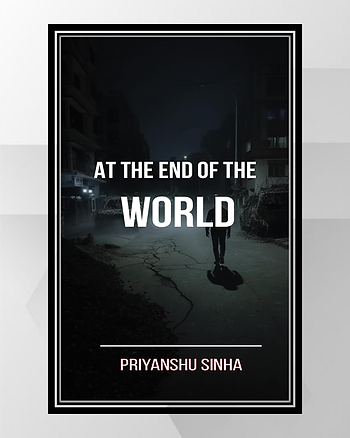
There is a particular kind of silence that does not feel empty. It feels occupied. While reading At the End of the World by Priyanshu Sunil Sinha, I kept returning to that feeling—the sense that absence itself can become a presence you walk beside.
This is not the loud end of the world we are used to seeing. No collapsing skylines. No heroic last stands. Instead, the novel opens like an abandoned corridor where your own footsteps start sounding unfamiliar after a while. A lone survivor moves through emptied cities believing he is the last witness left behind—and what begins as isolation slowly transforms into suspicion, then unease, and eventually something closer to dread.
What struck me most was how carefully the narrative refuses spectacle. The author trusts stillness. The prose carries a quiet restraint that makes the loneliness feel tactile, almost like dust settling on forgotten furniture. I found myself slowing my reading pace—not because the story demanded effort, but because the silence inside it asked to be respected. That is rare.
There is something deeply unsettling about a world where survival is no longer heroic but habitual.
The narrative voice works particularly well here. It is simple without being thin, reflective without becoming philosophical for the sake of sounding deep. That balance matters in a psychological post-apocalyptic story. Too much abstraction would have broken the immersion. Instead, the pacing allows discovery to unfold gradually, like footprints appearing where there should not be any. The tension grows not through action, but through awareness.
At one point while reading, I actually paused—not because something dramatic happened, but because something almost happened. A suggestion. A shift. A detail that did not belong. That pause stayed with me longer than many louder scenes in other dystopian fiction. It reminded me how effective restraint can be when a writer trusts the reader’s imagination.
The emotional layer of the book is where it quietly strengthens its grip. Beneath the surface survival narrative runs a deeper reflection on memory and identity. What remains of us when the world that defined us disappears? What does companionship mean when silence becomes your only routine? These are not asked directly, but they hover around the protagonist like unanswered radio signals searching for reception.
One of the strengths of this book is its atmosphere. The ruined landscape never feels decorative. It feels inhabited by questions. Another strength is the psychological pacing—the slow reveal of what may have happened to humanity avoids rushing toward explanation, allowing curiosity to mature into tension. And perhaps most importantly, the emotional tone remains consistent throughout. The loneliness never becomes melodrama. It stays believable.
If I had one hesitation, it is that readers expecting a fast-moving survival thriller filled with dramatic confrontations may initially feel disoriented by the quietness of the narrative. This story asks for patience. It unfolds like dusk, not lightning. But those willing to walk at its pace will likely find the experience far more lingering than explosive storytelling.
As someone who has always believed stories about survival are really stories about memory, I found myself thinking long after finishing the book—not about what ended, but about what changed. That is the transformation good speculative fiction quietly creates. It shifts your relationship with silence.
Readers who enjoy reflective dystopian fiction, psychological survival narratives, or stories where atmosphere carries as much weight as plot will feel especially at home here. This is not a novel you rush through for answers. It is one you sit with for echoes. And if you allow it, those echoes stay longer than expected.
#AtTheEndOfTheWorld #PriyanshuSunilSinha #PostApocalypticFiction #PsychologicalThrillerReads #SpeculativeLiterature #AtmosphericFiction #SurvivalNarratives #ReflectiveReading #DystopianStories #SameerGudhateReads #sameergudhate #thebookreviewman



Comments