


Sameer Gudhate on Why Love Feels Magical… But Isn’t Entirely Yours
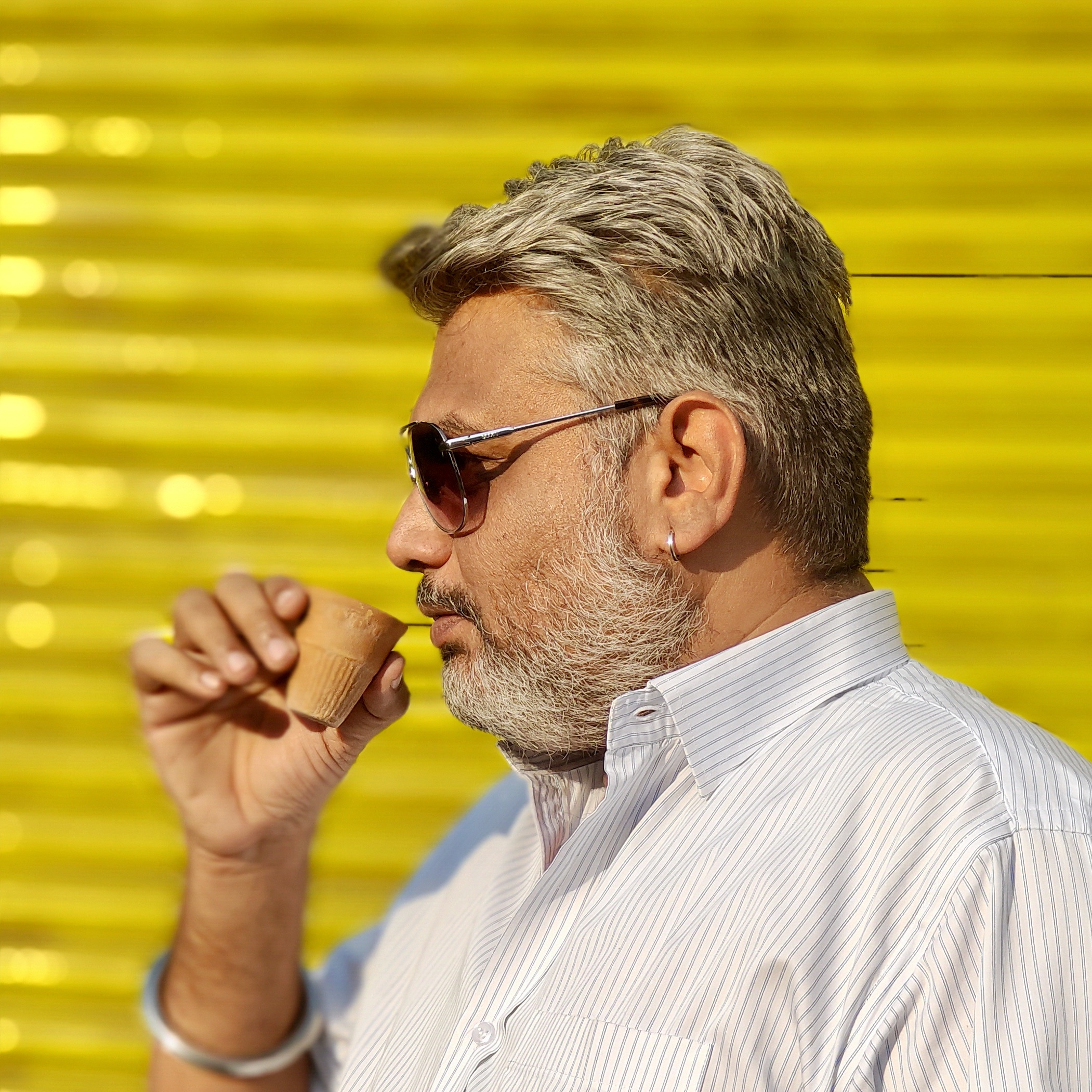

There are some books you finish… and then quietly sit with, as if something inside you needs a moment to rearrange itself.
A Brief History of Love did that to me.
Not dramatically. Not in a way that announces itself. But in a slow, almost unsettling way—like realizing that something you’ve trusted your whole life might not be entirely yours.
Because what if love… isn’t just yours?
I went into this book expecting insight. What I didn’t expect was a gentle dismantling.
Liat Yakir doesn’t approach love like a poet. She approaches it like a scientist who has spent years observing patterns most of us only feel. And somewhere between genes, hormones, and evolutionary instincts, she quietly shifts the ground beneath what we call “emotion.”
At one point, I found myself pausing—not because the writing was complex, but because it was uncomfortably clear. The idea that attraction isn’t random. That the people we feel drawn to might be influenced by biological cues we don’t consciously register. That love, in many ways, is the body making decisions long before the mind catches up.
That stayed with me.
Because it forces a strange question: How much of what we feel is choice, and how much is design?
The narrative doesn’t overwhelm you with jargon, but it does expect a certain openness. This isn’t a casual read you breeze through on instinct alone. There were moments where I had to slow down, reread a paragraph, let the terminology settle. Not difficult—but definitely demanding your attention.
And that’s where the book earns its respect.
It doesn’t dilute complexity for comfort.
Instead, it invites you to step into it.
What I appreciated most is how seamlessly it connects biology with lived experience. This isn’t just about chemicals like dopamine or oxytocin floating in isolation. It’s about how those very mechanisms shape your relationships, your patterns, even your heartbreaks.
Suddenly, love stops being abstract.
It becomes… traceable.
There’s a particular kind of discomfort in that. Not negative—just honest. Because once you begin to understand the machinery behind love, you can’t completely return to seeing it as pure magic.
But here’s where the book becomes more than just informative.
It doesn’t reduce love.
It deepens it.
Because knowing that something is influenced by biology doesn’t make it less meaningful—it makes it more layered. More fragile. More fascinating. Like watching a sunrise and knowing the science behind it, yet still feeling its beauty in your bones.
That duality is what the book handles exceptionally well.
The strength of this work lies in its clarity of thought and its ability to connect dots we rarely think to connect. It sharpens your awareness. It makes you observe your own reactions differently. Even something as simple as attraction starts to feel like a conversation between your biology and your consciousness.
At the same time, I’ll admit—this isn’t a book that emotionally sweeps you away. It engages your mind far more than your heart. If someone is looking for romance, they might feel slightly distanced by the analytical tone.
And occasionally, the scientific depth can feel a bit dense if you’re not familiar with basic biological concepts.
But neither of these are flaws.
They’re simply the nature of what the book is trying to do.
This is not a book that tells you how to fall in love.
It tells you why you do.
And that difference matters.
For me, the most powerful takeaway wasn’t a single concept—it was a shift in perspective. The realization that understanding love doesn’t weaken it. It gives you a chance to navigate it more consciously.
To recognize patterns.
To pause before repeating them.
To choose—not just feel.
If you’re someone who enjoys exploring the intersection of science and human experience, this book will stay with you. Not as a story, but as a lens.
And once you’ve seen through it, you don’t quite go back.
Maybe that’s the real beauty of it.
Love doesn’t become smaller when you understand it.
It becomes harder to ignore.
#BookReview #ScienceOfLove #LiatYakir #ReadingCommunity #NonFictionReads #PsychologyBooks #HumanBehavior #BookstagramIndia #ReadersOfInstagram #SameerReads #sameergudhate #thebookreviewman


Comments