


Sameer Gudhate Reviews Fractured Communities by Umar Khalid: History Is Never Just One Story
Some books arrive carrying more conversations than pages.
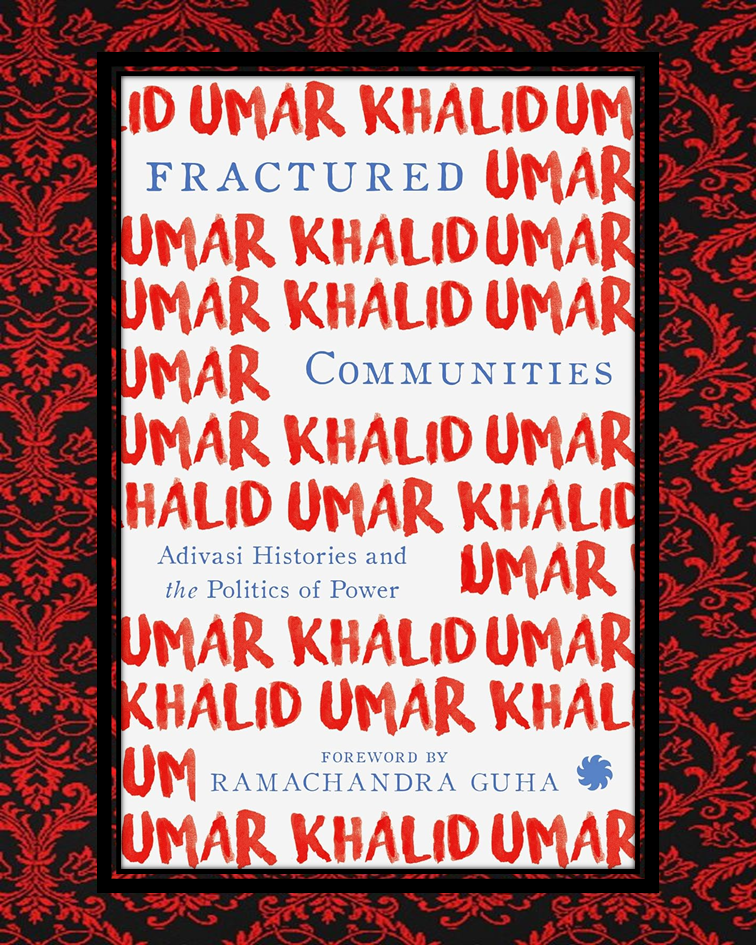
Long before I knew what Fractured Communities was trying to say, I knew who had written it. That, perhaps, is the strange reality of our times. We often meet an author through headlines before we ever meet their ideas. Opinions are already formed. Sides are already chosen.
It made me wonder how often we judge a book before opening it.
Once I looked beyond the name on the cover, something else became clear. This wasn't written to settle political arguments. It was written to ask historical questions. And there is a difference.
History has an odd habit of making everything look neat. We read about kingdoms, revolutions, tribes and communities as if they all spoke with one voice. As if everyone wanted the same future. As if disagreement never existed.
Real life has never worked that way.
Families disagree.
Villages disagree.
Countries disagree.
Why should history be any different?
That seems to be the space this book occupies. Instead of treating an entire people as one solid block, it looks at the layers within them. It reminds us that every community carries different ambitions, different conflicts and different ways of surviving difficult times.
That alone makes the conversation more honest.
One thing that stood out from everything I learned about this book was the amount of research behind it. This doesn't appear to be built on assumptions or sweeping statements. It grows patiently from years spent studying records, documents and forgotten pieces of evidence.
That patience matters.
We live in an age of thirty-second videos, instant opinions and headlines that leave no room for complexity. This book seems to move in exactly the opposite direction. It slows the reader down. It asks uncomfortable questions instead of offering comfortable conclusions.
I appreciated that.
What also interested me was the larger idea quietly running beneath the history.
Who gets to tell the story of a people?
Governments do.
Textbooks do.
Victors do.
Historians do.
But what happens when those stories become too simple?
What gets left behind?
Those questions feel surprisingly current, even though the events being examined belong to another century.
At the same time, this is not the kind of book that will appeal to everyone.
Its roots lie in serious academic work, and that shows. Readers expecting dramatic storytelling or fast-moving historical narrative may find its pace more deliberate. It asks for attention. It expects curiosity. It is less interested in entertaining than in carefully building an argument.
That isn't necessarily a weakness, but it does define the reading experience.
Another challenge has nothing to do with the writing itself.
It is impossible to ignore that the author is a public figure surrounded by strong opinions. For some, admiration will shape the reading. For others, criticism will do the same. Both reactions risk overshadowing the work itself.
Books deserve better than that.
Every serious piece of writing should ultimately stand on the strength of its evidence, its reasoning and its ability to make us reconsider what we thought we knew.
By the time I reached the end of everything available about Fractured Communities, I wasn't thinking about political labels anymore.
I was thinking about how easily we reduce people into categories.
We like simple stories because they are easier to remember.
History, however, is rarely simple.
It is full of contradictions, competing memories and uncomfortable truths.
Perhaps that is the quiet achievement of this book.
It doesn't try to make the past cleaner than it was.
Instead, it reminds us that every community—no matter how united it appears from a distance—is made up of countless individual voices. Some agree. Some resist. Some disappear from the record altogether.
Maybe understanding history begins not when we find a single story, but when we learn to listen for the many stories hiding beneath it.
#FracturedCommunities #UmarKhalid #IndianHistory #AdivasiHistory #ColonialHistory #HistoricalResearch #Historiography #NonFiction #BookReview #ReadingCommunity #sameergudhate #thebookreviewman


Comments