


The Courage to Think Aloud: Sameer Gudhate on Kiaan's Thus Spoke a Madman

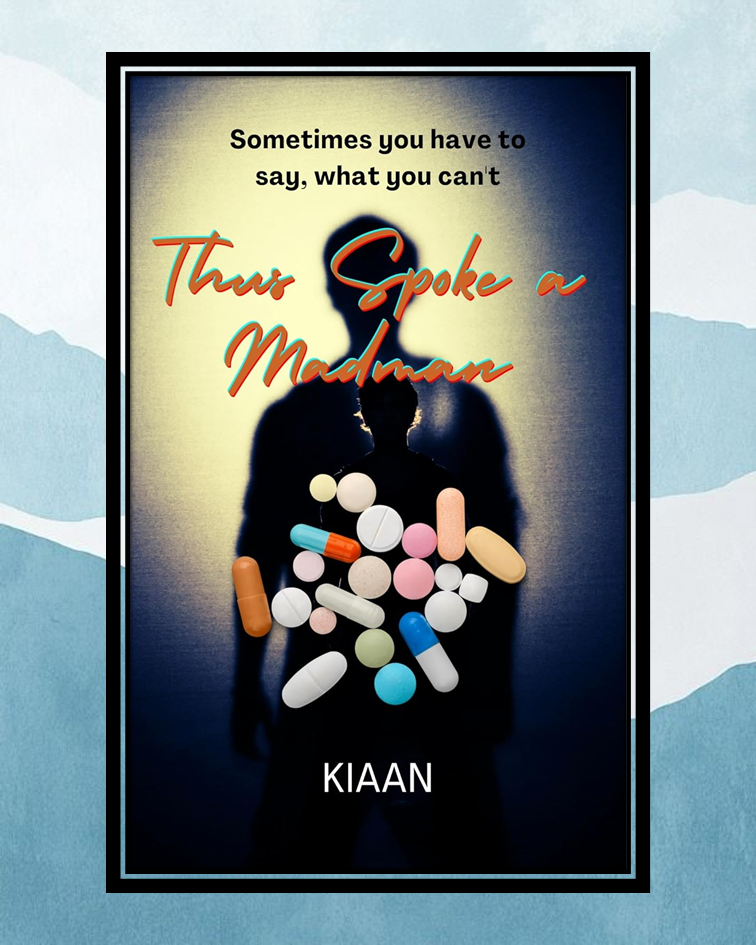
There is a peculiar contradiction in the way we speak about mental health. We encourage people to "open up," yet grow uneasy when they speak without filters. We celebrate vulnerability as long as it remains tidy, hopeful, and easily digestible. The moment pain becomes messy, obsessive, contradictory, or socially inconvenient, we instinctively step back. Kiaan's Thus Spoke a Madman lives precisely in that uncomfortable territory. It is less interested in reassuring the reader than in exposing the thoughts most people spend their lives hiding.
Calling this book a memoir only tells part of the story. It is equally a confession, a philosophical notebook, and a collection of personal meditations born from clinical depression and an intensely self-analytical mind. Rather than constructing a traditional narrative with a beginning, middle, and end, Kiaan allows readers to wander through fragments of his consciousness. The result feels deliberately uneven, mirroring the unpredictable rhythm of a mind trying to understand itself.
One of the book's greatest strengths is its refusal to perform recovery. Modern narratives around mental health often arrive at neat conclusions, offering redemption wrapped in motivational language. Kiaan does something more difficult. He admits to intrusive thoughts, loneliness, failed ambitions, complicated feelings about romance, religion, sexuality, free will, and even social media without constantly apologizing for them. Whether readers agree with his conclusions becomes almost secondary. What matters is that the thoughts feel lived rather than manufactured.
Writing itself becomes the book's central character. Professional consultations and medical intervention occupy the background, but it is the act of putting words onto paper that gradually transforms writing from expression into survival. Kiaan does not portray writing as a magical cure. Instead, it functions as a pressure valve—a place where chaos can exist without immediately demanding solutions. That distinction gives the memoir an honesty many books on emotional healing struggle to achieve.
I was reminded of how often we edit ourselves in everyday life. Scroll through any social media platform and you will find polished victories, carefully cropped happiness, and captions announcing lessons learned. Very few people post the thoughts they are ashamed of having. This book asks an unsettling question: if we only reveal the acceptable parts of ourselves, do we ever truly know one another? In an age obsessed with personal branding, Thus Spoke a Madman feels almost rebellious in its willingness to appear inconsistent.
That said, the very qualities that make the book distinctive also create its biggest limitation. Because it unfolds as a series of reflections rather than a tightly structured memoir, the reading experience occasionally feels repetitive. Certain ideas return in slightly different forms without adding substantially new dimensions. Readers expecting sustained storytelling or dramatic narrative progression may find themselves searching for firmer emotional landmarks. The philosophical musings, while engaging, sometimes move ahead of the lived experiences that could have grounded them more powerfully.
There are also moments when assertion replaces exploration. Kiaan often presents his opinions with remarkable confidence, but not every conviction receives the depth of examination it deserves. A stronger engagement with opposing perspectives might have made some of his arguments even more persuasive. After all, vulnerability is not only about revealing difficult thoughts; it is also about questioning them.
Yet these imperfections are strangely appropriate. A perfectly polished memoir about psychological struggle might have betrayed the very experience it attempts to portray. This book often feels like listening to someone think aloud rather than listening to someone deliver carefully rehearsed wisdom. That rawness gives it an unusual intimacy.
The sentence that lingered with me long after I finished was not a specific argument but an underlying realization: sometimes the most frightening voice is not the one inside our heads, but the one we silence before anyone else can hear it. That idea quietly echoes through every chapter.
Different readers will respond to this book in very different ways. Those seeking a conventional memoir with a strong narrative arc may find its fragmented structure challenging. Readers drawn to philosophy, introspection, and psychological self-examination, however, are likely to appreciate its uncompromising honesty. It does not offer certainty. It offers company.
We often say people should speak their truth. This book reminds us that what we usually mean is, "Speak your truth, but make it comfortable." Kiaan refuses that bargain, and whether one agrees with him or not, the discomfort he leaves behind says more than agreement ever could.
#ThusSpokeAMadman #Kiaan #Memoir #MentalHealthNarratives #PsychologicalMemoir #WritingAsHealing #DepressionAndRecovery #PhilosophicalWriting #BookReview #ReadersOfInstagram #sameergudhate #thebookreviewman


Comments