


When Stillness Starts Speaking: Sameer Gudhate on Finding Yourself in The Yoga Odyssey
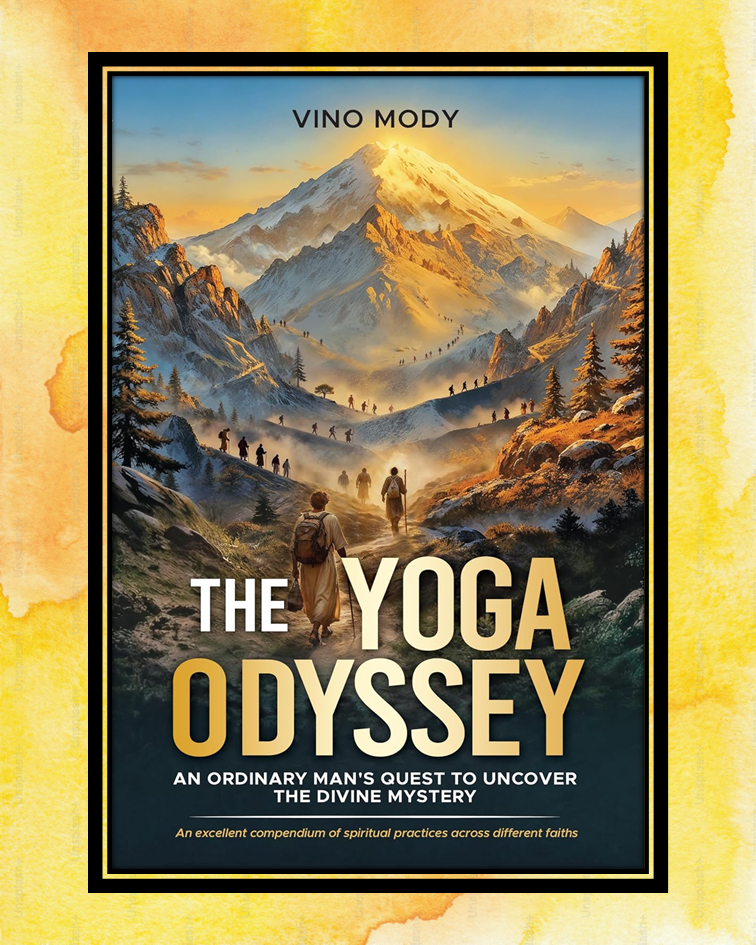
There’s a quiet moment that comes before you begin anything new—not dramatic, not cinematic—just a small pause where you ask yourself, “Will this actually change something in me?” I found myself in that exact space before opening The Yoga Odyssey: An Ordinary Man's Quest to Uncover the Divine Mystery by Vino Mody. Not expecting transformation. Just hoping for clarity.
What unfolded wasn’t a grand spiritual awakening. It was something far more honest.
This book doesn’t speak at you. It sits beside you.
At its core, the narrative isn’t trying to impress with complexity. It simplifies—almost deliberately so. Concepts like chakras, kundalini, and prana are often wrapped in layers of mysticism that can feel inaccessible. Here, they are gently unpacked, almost like someone explaining them over a long walk rather than a lecture. The prose doesn’t chase sophistication; it chooses clarity. And that choice defines the reading experience.
I remember pausing midway through a section on meditation—not because it was difficult, but because it felt unexpectedly familiar. That’s a rare kind of impact. When a book doesn’t introduce something new, but instead helps you recognize something you’ve been ignoring within yourself. That moment stayed.
The strength of this book lies in its intention. It doesn’t try to position yoga as an achievement or a destination. Instead, it frames it as a lived, evolving experience. The narrative keeps returning to one subtle idea: there is no finish line here. Just awareness, practice, and repetition. That idea lands quietly, but firmly.
What adds texture to the reading are the personal stories. They are not dramatic or exaggerated. In fact, their simplicity is what makes them believable. You don’t feel like you’re reading about a guru on a pedestal—you feel like you’re walking alongside an ordinary person trying to make sense of inner chaos. That relatability becomes the emotional anchor of the book.
There’s also a functional layer that works well. The sections on meditation and chanting are not just conceptual—they offer something you can do. And in today’s overstimulated world, that matters. The book doesn’t just talk about peace; it gives you small entry points toward it.
If I had to distill one thought that lingered long after I finished reading, it would be this: “Spirituality isn’t something you learn—it’s something you slowly stop resisting.”
That said, the simplicity that makes the book accessible can also feel limiting at times. If you’ve already spent years exploring yoga philosophy or deeper spiritual texts, parts of the book may feel a little surface-level. It doesn’t dive into philosophical depth or challenge your understanding in a complex way. It chooses breadth over intensity. Whether that works for you depends entirely on where you are in your journey.
The pacing mirrors the theme—steady, unhurried, almost meditative. But there are moments where you might wish for a sharper edge, a deeper exploration, or even a slightly more critical lens on certain ideas. The book stays safe in its tone. Comforting, yes—but occasionally at the cost of deeper friction.
And yet, maybe that’s intentional.
Not every book needs to shake you. Some just need to steady you.
This is one of those books.
If you’re someone standing at the edge of curiosity—wondering what yoga really means beyond physical exercise, or searching for a way to quiet the constant noise in your head—this book offers a gentle starting point. It doesn’t demand belief. It invites exploration.
And if you’re already deep into the practice, this might not redefine your understanding—but it might remind you why you started in the first place.
In the end, The Yoga Odyssey doesn’t feel like a guidebook or a manual. It feels like a mirror—slightly foggy at first, but slowly clearing the longer you stay with it.
And sometimes, that’s enough.
If you pick it up, don’t rush it. Let it sit with you. The real reading might begin after you’ve closed the book.
#YogaOdyssey #VinoMody #SpiritualJourney #MindfulnessMatters #InnerGrowth #BookReviewIndia #ReadingCommunity #SelfDiscovery #MeditationPractice #WellbeingJourney #sameergudhate #thebookreviewman


Comments