


Sameer Gudhate Presents the Book Review of My Own Mazagon by Captain Ramesh Babu

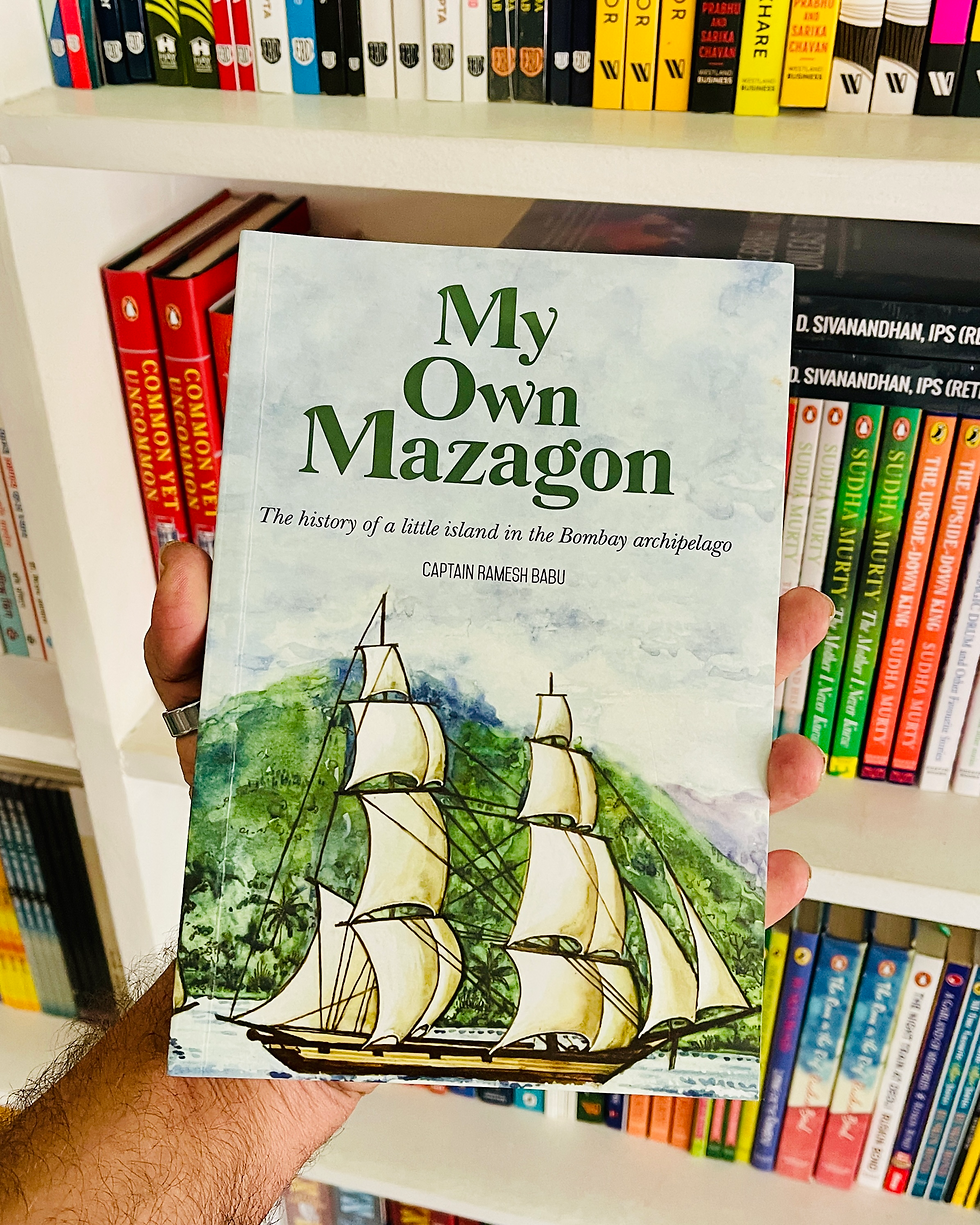
I closed the book in the late afternoon, when the house had begun to sound hollow again. The kind of quiet that arrives after lunch, when even the ceiling fan seems to turn more slowly. My legs were stretched out. One foot rested against the table leg without thinking. For a few seconds, I didn’t move. Not because I was overwhelmed—but because I felt oddly relocated.
As if I had returned from somewhere nearby that I’d never actually visited.
This book didn’t behave like history. It behaved like land. Solid, patient, unconcerned with whether I approved of it or not. It didn’t ask me to admire Mazagon. It simply kept placing it beside me—street by street, ruin by ruin—until the word “Bombay” felt incomplete without it.
At first, I resisted. I realized I was looking for the familiar hooks: drama, conflict, cleverness. Instead, what I encountered was accumulation. Names. Dates. Small decisions that never announce themselves as important while they’re happening. It felt like walking through a neighbourhood where no one stops to explain anything to you. You either slow down, or you miss it.
And so I slowed down.
Somewhere along the way, Mazagon stopped being an “island that once was.” It became a kind of stubborn memory that refused erasure. An island that knew it would be absorbed, but did not consent to being forgotten. Churches stood beside docks. A Chinese temple survived without explanation. Graves gathered people who did not belong to Mazagon by birth, but by ending.
What stayed with me most was not the grandeur of ships or commerce, but the quiet coexistence of contradictions. Opium and prayer. Cotton and exile. Justice administered in one corner of the city for crimes committed in another. Saints revered in places they never visited. This was not a neat story of progress. It felt closer to how cities actually live—by improvisation, compromise, and endurance.
There is a moment when the book begins to walk with you. Not metaphorically. Literally. Streets. Alleys. Corners that suddenly demand attention. I found myself pausing, imagining footfalls where maps now speak. It reminded me of how my father used to point out old structures—not with pride, but with certainty. This was here before you. That tone. Unarguable. Calm.
The author does not dramatize himself into the narrative, and that restraint matters. The research is extensive, yes, but it never flexes. It feels like someone who has sat with archives long enough to understand that facts don’t need decoration—only placement. Each chapter stands alone, yet together they feel like a long breath taken over centuries.
Still, there were moments where I felt the weight tip unevenly. Certain lives lingered longer than my own attention wanted to stay. I noticed impatience rise in me—not irritation, but restlessness. I didn’t resolve it. I let it sit. Perhaps that, too, is part of history: not every story arrives in proportion to our expectations.
What surprised me was how often the book made me aware of absence. The Kolis, the Bhandaris, the Agris—named early, then slowly thinned out by time. Reclamation as both engineering and metaphor. Land gained. Memory lost. I found myself wondering how many cities I walk through daily without realizing what had to disappear for them to feel permanent.
This is not a book you finish and recommend loudly. It is one you finish and begin to notice things differently afterward. Street names stop being convenient labels. They start sounding like survivors.
I did not come away feeling knowledgeable.
I came away feeling accountable.
Mazagon no longer feels like a place that “was.” It feels like something that continues, quietly, beneath the version of the city we rush through. And even now, days later, when I think of Bombay, there is a small hesitation—an island-shaped pause—before the word settles.
#MyOwnMazagon #Mazagon #BombayHistory #MumbaiStories #IslandsOfBombay #ForgottenHistories #CityAndMemory #HistoryAsMemory #ReadingWithAttention #BooksThatLinger #IndianHistory #UrbanHeritage #StoriesInStreets #LiteraryNonFiction #SameerGudhate #thebookreviewman


Comments