


Sameer Gudhate Reflects on Bro, We’ve Got A Case!: When Childhood Curiosity Refuses to Grow Up

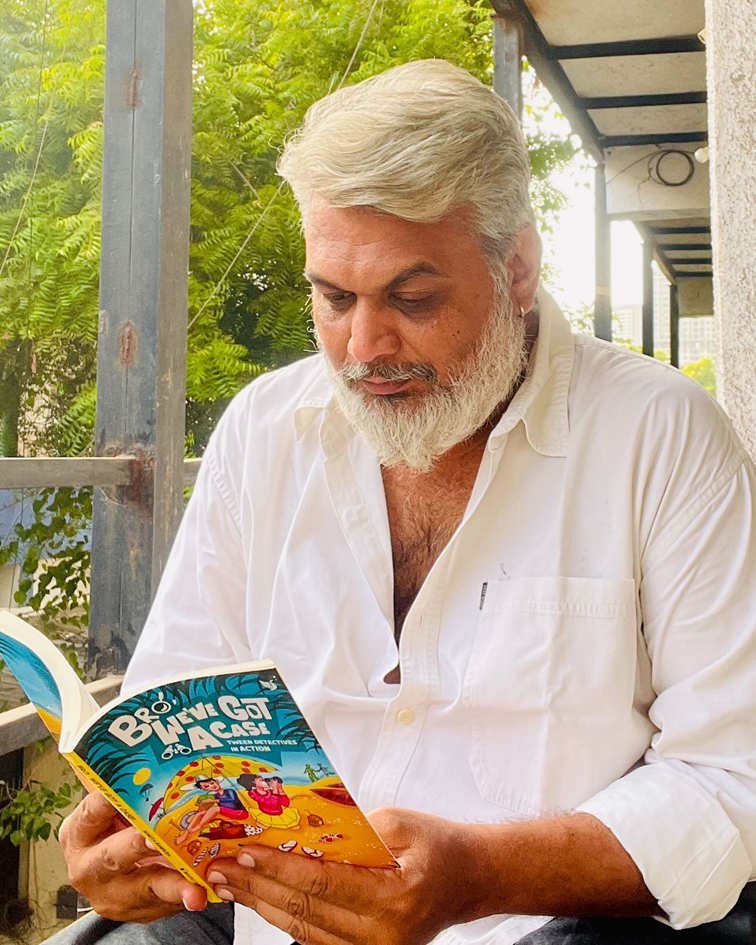
A bookmark was already waiting a few pages ahead because I was certain I would stop after the first case. It turned out to be one of those optimistic decisions readers make when they underestimate a good mystery.
The problem with Bro, We’ve Got A Case! is that it quietly slips into the part of your mind that still remembers what it felt like to believe every locked door hid a secret and every unusual sound deserved investigation. One case becomes two. Two becomes four. Before long, you are sitting there with the same eager curiosity that drives Anaya and Kiaan through these adventures.
What struck me first was not the mystery itself but the energy. The book moves like a group of children racing down a lane after spotting something suspicious, speaking over one another, arguing, laughing, and somehow making progress despite the chaos. That pacing gives the narrative a natural heartbeat. Nothing feels weighed down by unnecessary explanations. The stories understand that young readers rarely walk; they run.
Anaya and Kiaan are the kind of sibling characters who feel familiar almost immediately. Not because they are perfect, but because their bond carries the small frictions and unspoken loyalty that exist in many families. I found myself thinking of my own childhood whenever my cousins and I turned ordinary summer afternoons into imaginary investigations. We never solved crimes, of course. The closest we came was spending an entire day searching for a missing cricket ball that had rolled under a neighbour’s water tank. Yet the feeling was similar—that intoxicating belief that we were on the verge of discovering something important.
That sense of adventure flows through every page here.
Anaya’s ability to understand messages from nature introduces a touch of wonder without overwhelming the detective framework. It works because the book never treats this element as a spectacle. Instead, it becomes part of her character, another tool through which she experiences the world. In a literary landscape where young detectives often rely solely on gadgets or extraordinary intelligence, this connection with nature feels refreshing. It adds texture to the narrative and gently reinforces the idea that observation is not limited to screens and devices.
What impressed me even more was the emotional undercurrent beneath the mysteries. The crimes involve hackers, fraudsters, poachers, kidnappers, and thieves, but the stories are rarely interested in danger for its own sake. There is usually a human consequence waiting underneath. Empathy becomes as important as deduction. Courage matters, but kindness matters too.
That balance gives the book its strongest theme. Intelligence alone does not solve problems. Listening does. Working together does. Caring enough to act does.
There is also a quiet confidence in the prose. The language remains accessible for younger readers without talking down to them. That is a difficult balance to achieve. Many books written for this age group mistake simplicity for shallowness. Sumita Banerjea avoids that trap. The storytelling remains clear while still leaving room for emotion, reflection, and character growth.
One of my favourite aspects was the teamwork. Modern culture often celebrates the lone genius who solves everything single-handedly. This book pushes in the opposite direction. Clues are shared. Responsibilities are divided. Cousins join the mission. Success emerges collectively. That message lands naturally because it grows from the story rather than feeling imposed upon it.
A good mystery entertains. A memorable mystery changes the way readers look at the world around them. This collection does a little of both. It encourages young readers to pay attention—to people, to details, to consequences. In that sense, every case becomes more than a puzzle.
There is a line I found myself thinking about after finishing the book: curiosity is often just courage wearing a different disguise. Anaya and Kiaan embody that idea beautifully. They are not fearless children. They are simply willing to step forward when others step back.
Long after the final page, I could still picture them moving through another mystery somewhere just beyond view, notebooks in hand, eyes alert, convinced that every unanswered question deserves a second look. And perhaps that lingering image is the book’s greatest impact.
If you grew up loving adventures, or if there is a young reader in your life who is beginning to discover the joy of stories, I would be curious to know which case captures their imagination first.
#BroWeveGotACase #SumitaBanerjea #ChildDetectives #MiddleGradeBooks #MysteryForYoungReaders #SiblingAdventures #ReadingCommunity #DetectiveFiction #BooksForTweens #IndianAuthorsWritingForChildren #sameergudhate #sameergudhate


Comments