


Sameer Gudhate Reflects on Saga of The Djinn's Daughter: Every Family Inherits Something

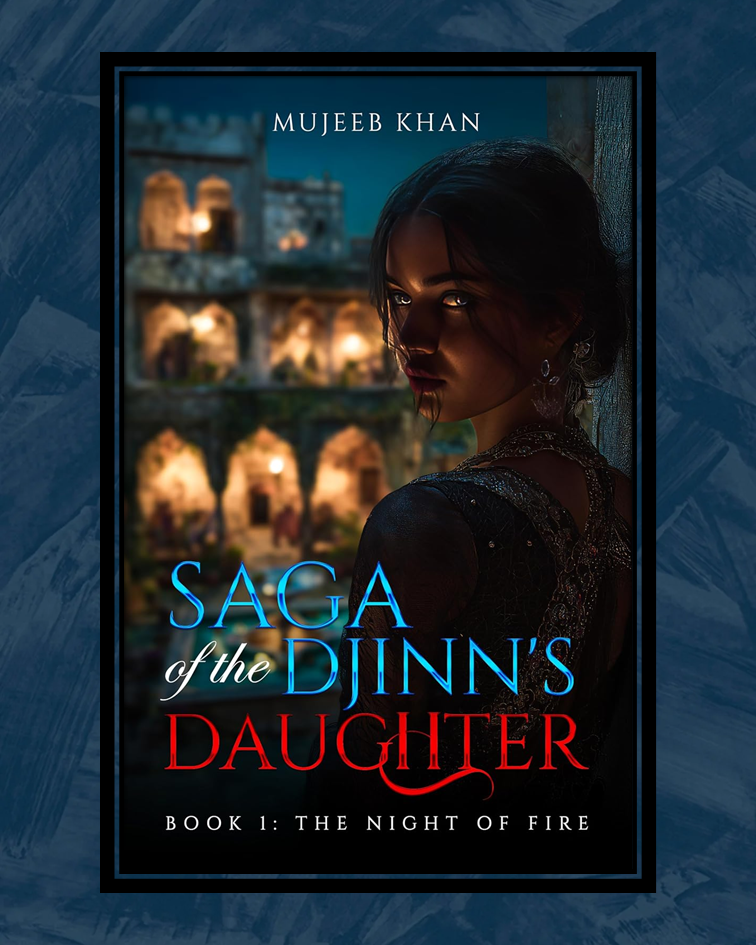
There was a moment, somewhere around midnight, when I looked up from the page and instinctively glanced toward the dark corner of my room. Nothing was there. Of course nothing was there. Yet Saga of The Djinn's Daughter – Book 1: The Night of Fire had quietly altered the atmosphere around me in the way only certain stories can. The ceiling fan continued its familiar hum. A distant vehicle passed outside. But the ordinary no longer felt entirely trustworthy.
That is the peculiar strength of Mujeeb Khan's debut novel. It does not attempt to frighten through noise. It unsettles through memory.
Growing up in Maharashtra, I have heard enough stories whispered by elders to know that folklore rarely arrives wearing the costume of fantasy. It comes disguised as a warning, a family anecdote, a neighbour's experience that nobody can quite prove and nobody dares dismiss. Reading this book reminded me of sitting on the balcony of my childhood home during power cuts, listening to adults lower their voices whenever conversations drifted toward abandoned houses, graveyards, or unexplained encounters. The stories always sounded impossible. Yet they carried the weight of belief.
That same weight hangs over this narrative.
The haveli at the centre of the story is not merely a setting. It feels like a wounded witness. Its walls absorb grief, desperation, hope, and fear until the structure itself becomes a living participant in the drama. The literary achievement here lies in how naturally the house merges with the emotional condition of the Malik family. As financial hardship pushes Hassan Malik toward increasingly fragile decisions, the building seems to lean closer, listening.
The result is a haunting narrative where the supernatural never overshadows the human.
What stayed with me most was not the presence of djinn, restless entities, or ancient forces lurking beyond sight. It was the emotion beneath them. Every apparition feels connected to a very human vulnerability. Fear emerges from love. Sacrifice grows from desperation. Protection arrives carrying its own dangerous cost.
Imaara, the mysterious girl at the heart of the novel, is particularly fascinating because she resists easy categorisation. She is neither comfortingly innocent nor conventionally threatening. She occupies that unsettling space between blessing and burden. Every scene involving her carries an undercurrent of uncertainty, and that uncertainty becomes one of the book's most effective engines.
Mujeeb Khan's prose often feels like walking through an old neighbourhood after heavy rain. The roads are familiar, but reflections in puddles distort everything just enough to make you question what you are seeing. His descriptions are strongest when they embrace restraint. Rather than explaining every mystery, he allows shadows to remain shadows.
That said, the novel occasionally becomes so invested in atmosphere that its pacing slows. A few sections linger longer than necessary on mood when the narrative is eager to move forward. Yet even these moments serve a purpose. They deepen immersion rather than derail it. In a story rooted in folklore and dread, atmosphere is not decoration; it is part of the architecture.
What impressed me most was the book's commitment to its cultural identity. Too often, supernatural fiction borrows heavily from imported mythologies. Here, the soil feels local. The graveyards, mohallas, family dynamics, inherited fears, and spiritual anxieties belong unmistakably to the Deccan landscape. The folklore does not feel researched. It feels remembered.
There is also a powerful theme running beneath the horror. The novel repeatedly asks what happens when love becomes entangled with obligation, when protection demands sacrifice, and when survival itself begins to resemble a bargain. These questions give the story emotional gravity long after individual scenes have passed.
By the time The Night of Fire reaches its climactic confrontation, the novel has transformed from a ghostly family drama into something larger—a reflection on belonging, responsibility, and the unseen debts that travel through generations.
When I finally closed the book, I found myself thinking not about monsters but about houses. The old ones. The forgotten ones. The ones standing silently at the end of narrow lanes, carrying decades of stories inside their cracked walls. Mujeeb Khan understands something important: the most frightening places are not always haunted by spirits.
Sometimes they are haunted by memory.
And if you have ever stood before an old locked door and wondered what might still be waiting on the other side, I would be curious to know what this story awakens in you.
#SagaOfTheDjinnsDaughter #MujeebKhan #IndianDarkFantasy #SouthAsianGothic #DjinnMythology #FolkloreFiction #DarkFantasyReads #HorrorBookCommunity #LiteraryFictionLovers #BookReviewIndia #sameergudhate #thebookreviewman


Comments