


Sameer Gudhate Reflects on Soldier’s Girl: You Don’t Date a Soldier… You Share Him with the Nation
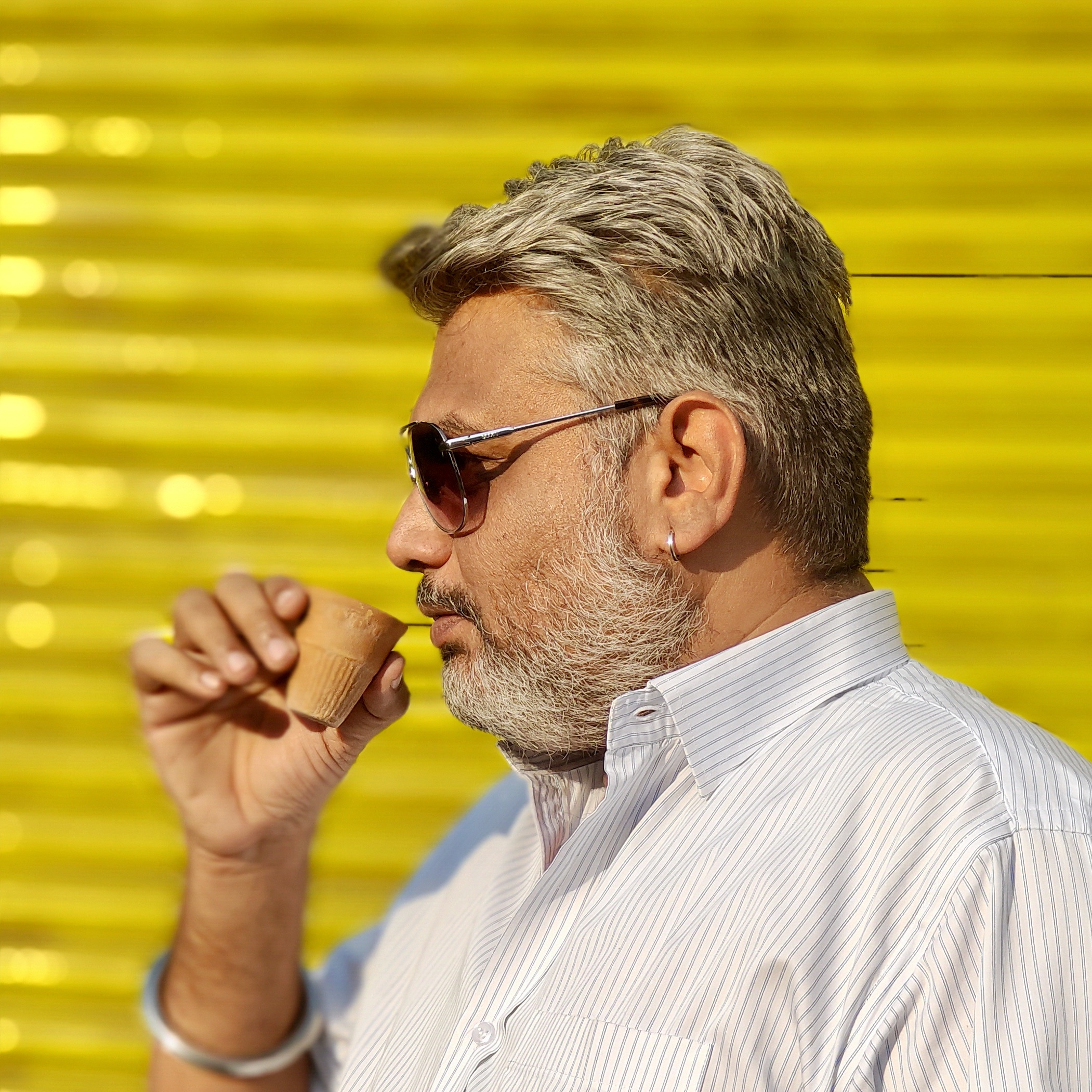

There’s a certain kind of silence I’ve grown up respecting.
The kind that sits in a room when a uniform is mentioned.
The kind that doesn’t need explanation.
Maybe it comes from watching my father—an Indian Air Force veteran—carry stories he never fully told. Or maybe it comes from that younger version of me who once dreamed of wearing the olive green, not fully understanding what it demands… only knowing it demands everything.
That’s the space I walked into while reading Soldier’s Girl by Swapnil Pandey.
Not as just another love story.
But as a question I’ve never been able to answer comfortably—
What does it actually mean to love someone whose first loyalty will never be you?
At its surface, the narrative feels fast, almost cinematic. Ananya’s world—reckless, messy, impulsive—collides with Aakash’s world of discipline, danger, and detachment. The contrast
is sharp, almost jarring at times. But that friction is where the story finds its rhythm.
Because this isn’t a gentle romance.
It’s a restless one.
The prose doesn’t slow down to decorate emotions. It moves. Quickly. Sometimes too quickly. Scenes arrive, hit, and move on—almost like orders being executed rather than moments being lingered in. And strangely, that pacing mirrors the life it is trying to depict. In a soldier’s world, nothing waits. Not love. Not war. Not closure.
There was a moment while reading when I caught myself pausing—not because the writing demanded it, but because the idea did.
Loving a soldier is not romantic in the way we are taught to imagine romance.It is repetitive loss.
Daily uncertainty.
A constant negotiation with fear.
And that’s where the book quietly lands its strongest emotional impact.
Aakash, as a character, almost feels larger than life at first—parachuting into danger, operating in shadows, carrying that aura we often associate with commandos. But beneath that image, there’s a distance. Not coldness. Just… distance. The kind that comes from knowing attachment can become a liability.
Ananya, on the other hand, is all impulse and reaction. She feels everything loudly. Makes choices without fully processing them. And while that may feel chaotic, it also makes her real. She doesn’t behave like a “perfect” protagonist. She behaves like someone trying to keep up with a life she was never trained for.
And then comes the emotional triangle.
Not as a cliché.
But as a consequence.
Anant’s presence doesn’t just complicate the narrative—it exposes something uncomfortable. That in the absence of certainty, even love begins to adapt. Sometimes in ways we don’t want to admit.
One of the strengths of the book lies in how it blends extremes—humour and brutality, lightness and grief. There are moments that genuinely make you smile, almost disarming you… and then the narrative shifts, pulling you into the harsh reality of war and its aftermath.
The war sequences themselves are not deeply technical, but they don’t need to be. Their purpose isn’t to inform. It’s to disturb. To remind you that behind every headline, there are lives quietly breaking.
If I were to be honest, the book does have its rough edges. The pacing, while energetic, sometimes rushes past moments that deserved stillness. Emotional transitions occasionally feel abrupt, as if the narrative is more eager to move forward than to sit with its own depth.
But even with that, the intent is unmistakable.
This is not a polished literary piece trying to impress.
It’s an emotional outpouring trying to be felt.
And that distinction matters.
Because when the book ends, what stays isn’t the plot.
It’s a feeling.
A quiet, uncomfortable understanding that love, in certain lives, is not about forever. It’s about endurance.
“Some people don’t wait for love to be easy… they wait because leaving would be harder.”
This is a book for those who have, at some point, loved someone whose life could never fully belong to them. It’s for readers who don’t mind a little chaos in their narrative, as long as the emotion underneath feels honest.
And maybe, it’s also for those who have stood on the sidelines of a uniformed life… wondering what it really costs.
If you’ve ever asked that question—even silently—this story might stay with you longer than you expect.
#SoldiersGirl #SwapnilPandey #MilitaryRomance #IndianArmyStories #LoveAndWar #BookReviewIndia #ReadingCommunity #EmotionalReads #WarAndLove #SameerGudhate #thebookreviewman


Comments