


Sameer Gudhate on Still Breathing: For Everyone Who Smiled Through Things They Could Never Explain
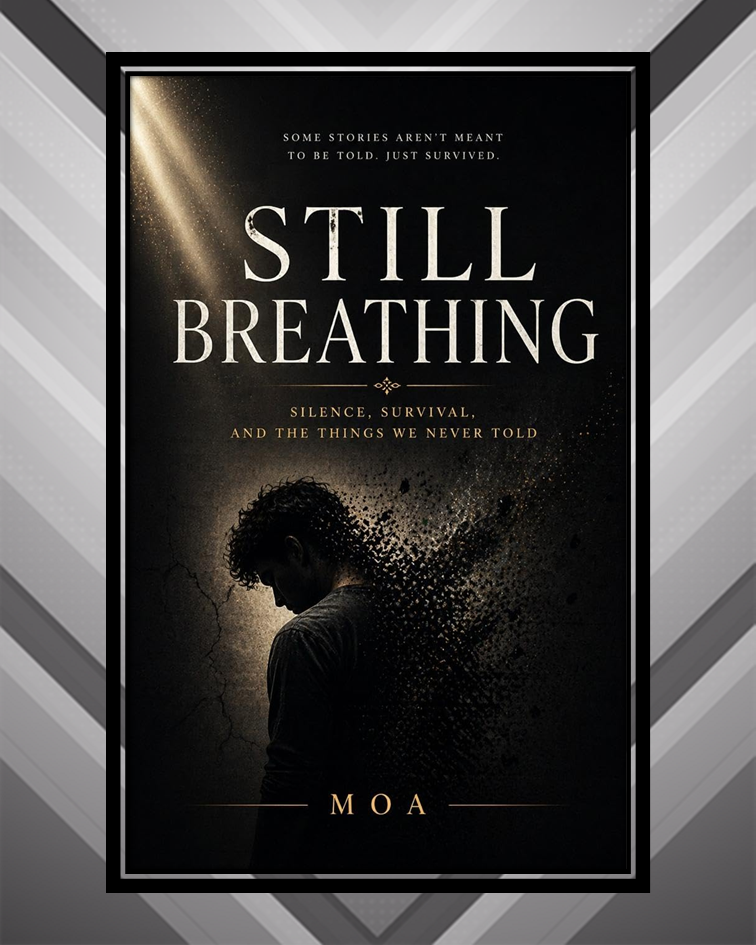
There is a moment somewhere around the first fifty pages of Still Breathing: Silence, Survival, and the Things We Never Told when I had to place the Kindle face down beside me and walk to the balcony for air. It was past midnight. Somewhere below, a scooter kept refusing to start, again and again, the sound echoing through the lane like frustration refusing to die quietly. I remember standing there with one hand on the rusted railing, feeling the strange discomfort of recognizing emotions you have spent years teaching yourself not to name. The book did not feel like something I was reading. It felt like something waiting for me.
Not because the memoir tries to shock you. It doesn’t.
What unsettled me was its refusal to perform healing.
Most trauma narratives eventually begin negotiating with the reader. They search for redemption too quickly. They clean the blood before the wound has even stopped shaking. M.O.A does something riskier. He leaves the ache where it is. Raw. Unorganized. Sometimes repetitive. Sometimes emotionally claustrophobic. But honest in the way midnight confessions are honest when two exhausted people stop pretending they are okay.
This book does not read like literature polished for applause. It reads like someone scratching at concrete from underneath it.
And that changes the emotional impact entirely.
The strongest thing about this narrative is not the suffering itself. Suffering alone means nothing in memoir writing. Thousands suffer. Very few can translate internal collapse into prose that feels physically inhabited. M.O.A occasionally achieves that with startling force. Certain passages arrive like fragmented mirror shards—small, jagged, impossible to hold comfortably. Especially when he writes about silence inside families. Not loud violence. Not cinematic cruelty. Silence. The kind that sits at dining tables while everyone continues eating.
“I did not yet know that not every room full of applause is a safe place.”
That line stayed with me for hours.
Because every reader above a certain age understands it differently.
You suddenly remember offices where you smiled too much. Friendships where you performed happiness like unpaid labour. Family gatherings where your body sat present while your mind quietly waited for escape. The memoir understands that trauma is not always one catastrophic event. Sometimes it is erosion. Emotional dripping water inside a locked cave.
I admired the book most when it abandoned explanation and trusted emotional rhythm instead. The fragmented pacing mirrors dissociation surprisingly well. Memories arrive out of order. Emotional associations interrupt chronology. Certain scenes repeat with altered emotional texture, almost like the mind reopening bruises to check whether they still hurt.
They do.
At times, though, the book struggles under the weight of its own intensity. Some sections circle the same emotional corridor too many times without deepening the reflection. A tighter editorial hand could have sharpened the prose further. There were moments where I wanted the author to pause and go deeper instead of louder. Pain repeated is not always pain expanded. This memoir is strongest when it whispers.
Still, even its flaws feel strangely human.
The author’s note affected me more than I expected. Particularly the line about becoming his own therapist, surgeon, priest, and forensic expert. There is something devastating about people who spend years diagnosing themselves emotionally because nobody around them knew how to listen properly. Growing up in many Indian households, emotional survival often becomes private work. You learn to translate panic into productivity. You learn to call numbness maturity.
This memoir understands that language intimately.
There is also courage in the disclaimer itself. Not performative courage. Quiet courage. The kind that knows people will misunderstand the telling and chooses honesty anyway. The book repeatedly reminds us that memory is unstable terrain. Trauma rearranges chronology. Shame edits detail. Survival distorts perspective. M.O.A acknowledges this imperfection instead of hiding behind artificial certainty.
And that matters.
Because the memoir ultimately becomes less about diagnosis and more about visibility. About what happens when somebody finally says: this happened to me, and I am tired of carrying it alone.
Halfway through the book, I remembered something I had not thought about in years. As a teenager, after everyone slept, I used to sit near the window grill during monsoon nights just to hear local trains passing through darkness. There was comfort in knowing something else was moving too. That is what this book resembles. Not therapy. Not transformation. Movement.
Slow. Bruised. Incomplete movement.
Some books entertain you. Some impress you. Some sit beside you quietly while you remember things you buried because functioning felt more important than feeling.
Still Breathing belongs to the third category.
And long after the final page, what remains is not the trauma itself, but the image of a person standing inside unbearable emotional weather and deciding, somehow, to stay.
That decision alone can save lives.
#StillBreathingBook #MOA #TraumaMemoir #IndianReaders #MemoirCommunity #MentalHealthInLiterature #SurvivalNarratives #LiteraryMemoir #BooksThatHeal #ReadingBetweenTheLines #sameergudhate #thebookreviewman


Comments