


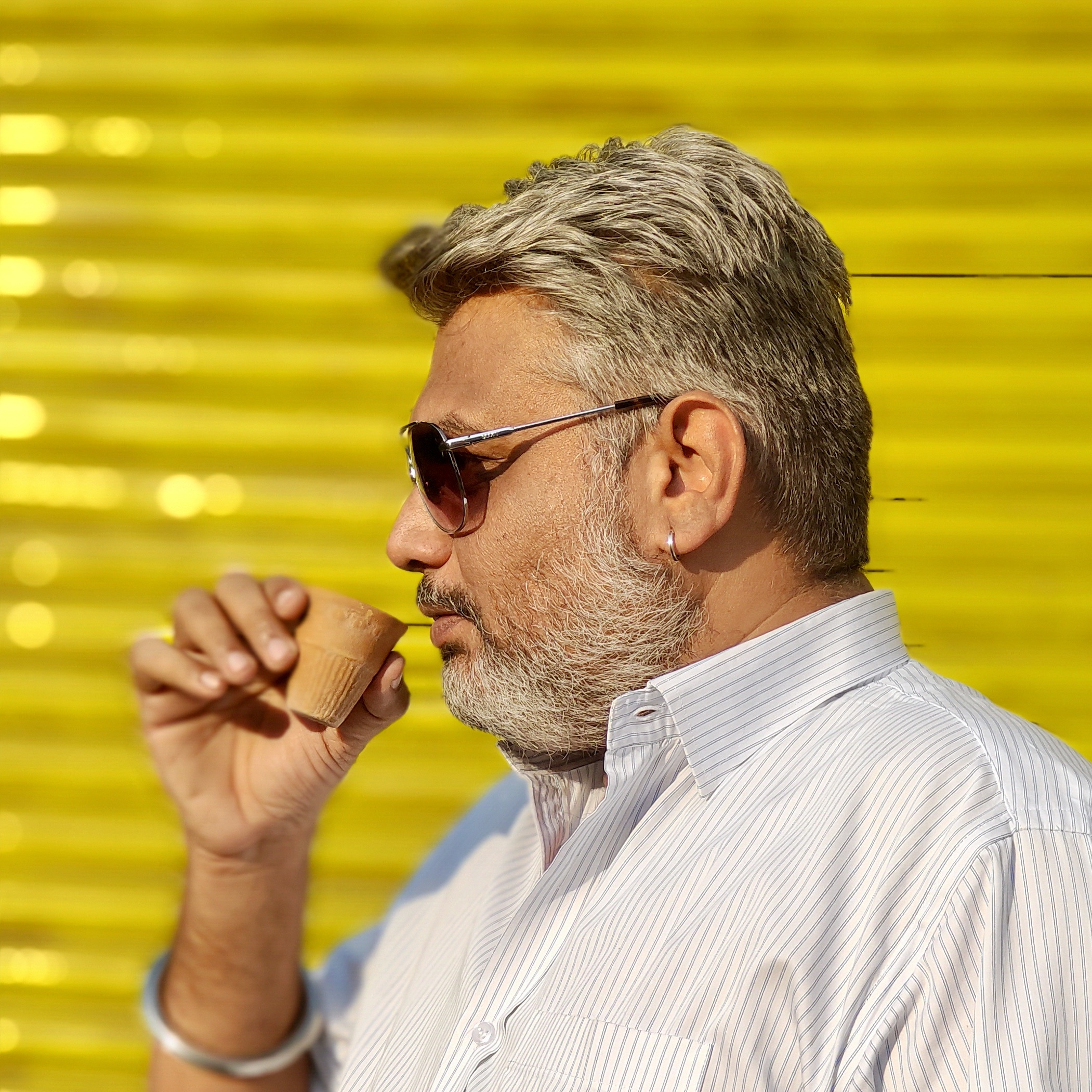
Sameer Gudhate Presents the Book Review of Whispers in the Cursed Desert by Sunali Singh Ranaa

I began this book late one evening, telling myself I’d read a chapter or two and return to the world of notifications and half-finished thoughts. Instead, I found myself sitting still, the room unusually quiet, as if the desert itself had stretched into my living space. Whispers in the Cursed Desert: Inked in Blood doesn’t announce itself with noise. It draws you in with hush. With breath. With the feeling that something old is watching you closely, waiting to see if you’re ready to listen.
Sunali Singh Ranaa writes fantasy the way some people tell family stories—carefully, deliberately, aware that what’s being passed down carries both wonder and weight. Set in the ancient desert city of Zephyria, the novel is anchored in mystery, but what stayed with me wasn’t just the intrigue of hidden histories or inherited magic. It was the emotional undercurrent running beneath every scene, like heat under sand. This is a narrative that understands that loss is not loud. It lingers. And it shapes everything that comes after.
At its heart is Layla, a protagonist driven not by grand ambition but by unanswered questions. The death of her parents is not a convenient backstory; it’s a wound that informs her every decision. Her journey unfolds as a careful negotiation between fear and resolve, vulnerability and strength. Watching her move through Zephyria felt less like witnessing a hero’s rise and more like walking beside someone learning, step by step, how to trust herself. That emotional realism gives her character a quiet credibility. You believe her doubts. You feel her hesitation. And when she finds moments of courage, they feel earned.
The prose is controlled and evocative, never ornamental for its own sake. Danger feels physical, almost textured. Magic is not fireworks; it has consequence, intimacy, and cost. The desert itself emerges as a character—stern, reflective, and deeply observant. It mirrors the inner landscapes of those who cross it, especially Layla, becoming both obstacle and teacher. This literary restraint allows emotion to surface naturally, without being forced, and gives the narrative its steady pacing.
One of the most resonant elements is the Alchemic Shamir Crystal, scattered in shards across realms. It works beautifully as more than a plot device. Its fragmentation echoes the emotional fractures the characters carry—grief, secrecy, inherited responsibility—and the slow, deliberate work of becoming whole again. That symbolism unfolds gently, without explanation, trusting the reader to connect the dots. I appreciated that trust.
Sobek and Kaleb add further depth through their moral ambiguity. They are not guides who glow with certainty, nor villains carved from darkness. Their choices exist in uncomfortable grey zones, reminding us that intent and outcome rarely align neatly. Their presence complicates the story in a way that feels honest. In life, after all, we’re often shaped by people who mean well and still cause harm—or protect us in ways we don’t immediately understand.
Structurally, the book balances action with reflection. There are moments where the pace slows, inviting pause rather than push. For some readers, this may feel like a hesitation. For me, it felt intentional—a space to breathe, to absorb the emotional impact before moving forward. The epilogue, rich with celestial imagery, doesn’t tie everything into a neat bow. Instead, it leaves you with questions, the kind that echo long after the last page. Questions about courage. About inheritance. About what it truly means to claim power without losing tenderness.
If I had to name the book’s greatest strength, it would be its emotional integrity. This is fantasy grounded in feeling, in reflection, in transformation that unfolds quietly rather than explosively. It respects the reader’s patience and rewards attentiveness. Any minor resistance I felt came from moments where I wanted to linger longer in certain scenes—but even that speaks to the immersive quality of the world Ranaa has created.
I would recommend Whispers in the Cursed Desert to readers who seek fantasy not just as escape, but as experience. This is a book for evenings when you want to slow down, when you’re open to being unsettled in thoughtful ways, when you want a story that listens as much as it speaks. By the end, Zephyria doesn’t feel like a place you visited. It feels like a place that visited you—leaving behind sand in your pockets, questions in your mind, and a quiet reminder that sometimes, the most powerful transformations happen in the stillness.
If you’re willing to listen closely, this book whispers back.
#BookReview #FantasyFiction #IndianAuthors #WomenInFantasy #EmotionInStories #LiteraryFantasy #ReadingReflections #BookstagramIndia #SpeculativeFiction #MustReadFantasy #sameergudhate #thebookreviewman


Comments