


Sameer Gudhate Reflects on Drive: What If Motivation Was Never the Problem?

There was a time when motivation, for me, was simple.
Do the work. Get the result. Feel good about it. Repeat.
It felt clean. Predictable. Almost mechanical.
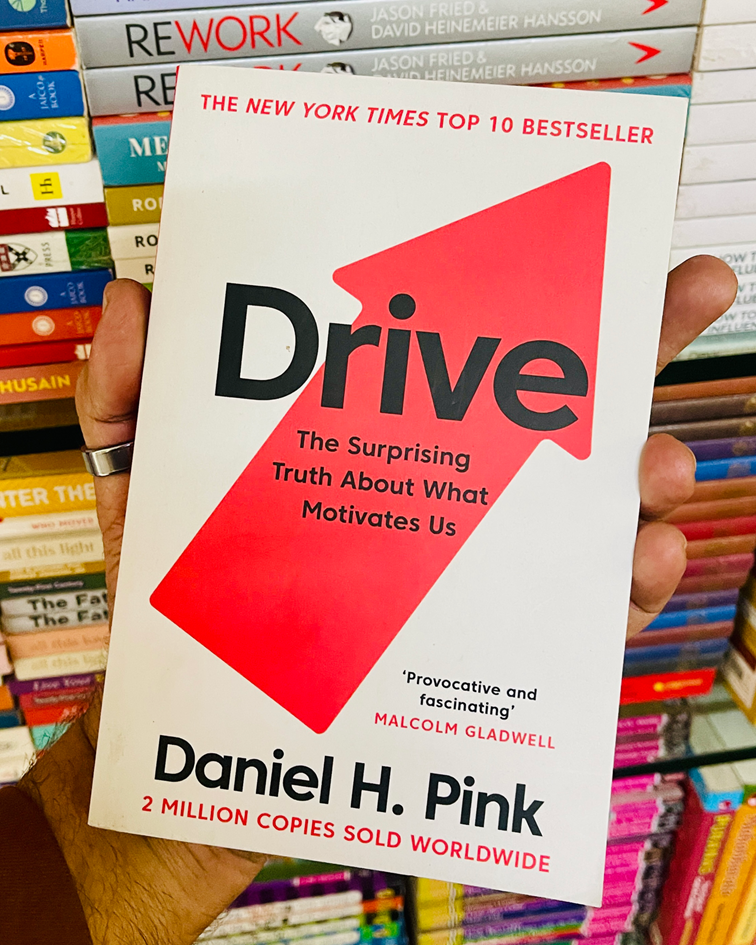
And then I read Drive: The Surprising Truth About What Motivates Us by Daniel H. Pink… and that simplicity started to fall apart.
Not dramatically.But quietly… like realizing something you’ve always believed might not be entirely true.
At its core, this isn’t a motivational book in the way we’ve been conditioned to expect. It doesn’t push you with energy or slogans. Instead, it slows you down and asks an uncomfortable question—what actually drives you?
And more importantly… is it still working?
What stayed with me early on is how the narrative challenges the classic carrot-and-stick approach. Rewards and punishments. The system most of us grew up with—in schools, workplaces, even at home.
For a long time, it felt logical.
Do this, get that.
But as Pink unpacks it—backed by study after study—you begin to see the cracks. Not because the system is entirely wrong, but because it’s incomplete.
It works… until it doesn’t.
There was a moment while reading where I paused—not because the idea was complex, but because it felt too familiar. The realization that many of us are still operating on motivations designed for a different era.
That pause stayed.
The book introduces three elements—autonomy, mastery, and purpose. On paper, they sound simple. Almost obvious. But in practice, they are deeply disruptive.
Because they shift motivation from external validation… to internal alignment.
And that’s where things get complicated.
Autonomy asks—how much control do you actually have over your work?Mastery asks—are you improving, or just repeating?Purpose asks—does any of this mean something beyond the outcome?
These are not easy questions.
And the book doesn’t pretend they are.
What I appreciated is the balance between research and readability. The ideas are grounded in experiments, but they don’t feel overwhelming. Instead, they build slowly—almost like a case being made, layer by layer, until resistance starts to soften.
That said, there are moments where the narrative leans heavily on theory. If you’re someone who prefers immediate, actionable takeaways, parts of the book may feel stretched.
But I don’t think the intention here is quick application.
It’s perspective shift.
And that difference matters.
Because once you begin to see motivation this way, it becomes difficult to go back to simpler frameworks.
There’s also something slightly unsettling about it.
Because if external rewards are not enough… then the responsibility shifts back to you.
To your choices.Your environment.Your willingness to engage deeply.
And that’s harder.
If I had to hold onto one thought from this book, it would be this:
“Motivation isn’t something you apply. It’s something you uncover.”
Not everyone will connect with this book in the same way. If you’re looking for high-energy inspiration, this may feel too measured. Too analytical.
But if you’re willing to question how and why you do what you do… this will stay with you.
Not as a set of answers.
But as a lens.
For me, it didn’t change how I work overnight.
But it did change how I think about working.
And sometimes, that’s where real change begins.
#DriveBook #DanielPink #BookReviewIndia #SameerGudhateReads #MotivationScience #PersonalGrowth #ReadingCommunity #BehavioralPsychology #BooksThatShiftYou #WorkAndPurpose #sameergudhate #thebookreviewman



Comments